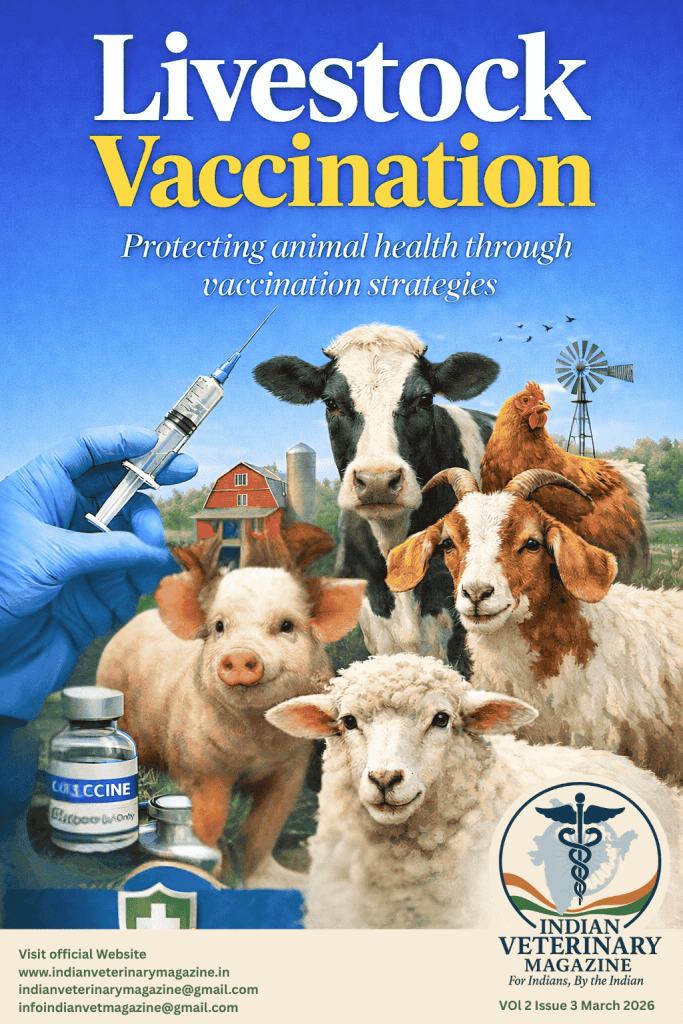
Livestock vaccination
Livestock vaccination plays a crucial role in safeguarding animal health, ensuring sustainable livestock production, and protecting rural livelihoods in India. With the country possessing one of the largest livestock populations in the world, preventive healthcare through systematic vaccination is essential to control infectious and transboundary animal diseases. Vaccination not only reduces mortality and morbidity in animals but also enhances productivity in terms of milk, meat, and draught power.
In India, livestock contributes significantly to the agricultural economy and provides income and nutritional security to millions of small and marginal farmers. Diseases such as Foot and Mouth Disease (FMD), Hemorrhagic Septicemia (HS), Black Quarter (BQ), Peste des Petits Ruminants (PPR), and Brucellosis pose serious threats to livestock productivity. Strategic vaccination programs implemented by the Government of India aim to control and eventually eradicate these diseases, thereby strengthening the livestock sector and improving farmers’ economic stability.
Effective livestock vaccination programs require coordinated efforts involving veterinary services, farmers, researchers, and policymakers. Awareness among livestock owners, proper vaccine handling, cold chain maintenance, and timely administration are essential components for achieving successful immunization coverage. Strengthening vaccination infrastructure and adopting modern disease surveillance systems will play a key role in improving animal health management and ensuring the long-term sustainability of the livestock sector in India.

 Indian Veterinary Magazine (ISSN:3108-1398)