-
What’s about Current Issue
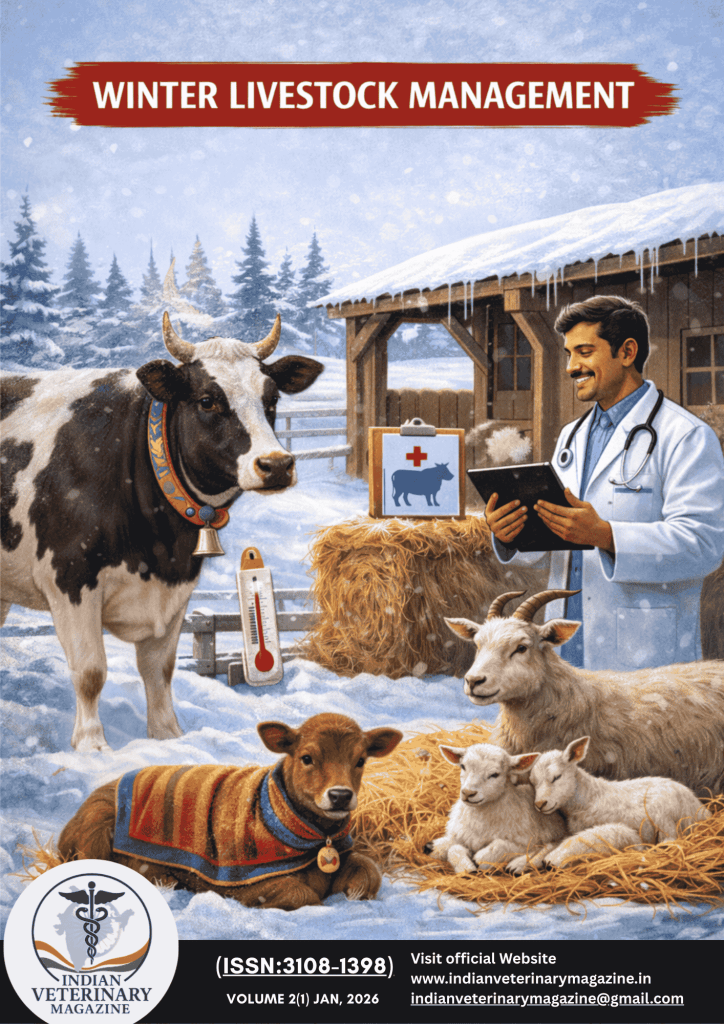
Winter Livestock Management: Safeguarding Animal Health and Productivity in Cold Stress Conditions
Winter poses significant physiological and managerial challenges for livestock, particularly in temperate and subtropical regions where animals are not fully adapted to prolonged cold stress. Inadequate winter management often results in reduced productivity, compromised immunity, higher disease incidence, and increased mortality, especially among neonates and aged animals (Shamim et al., 2012).
Impact of Cold Stress on Livestock
Cold stress elevates maintenance energy requirements as animals expend more energy to maintain body temperature. This leads to reduced weight gain, lower milk yield, delayed estrus, and impaired reproductive efficiency. Prolonged exposure to cold, wind chill, and moisture can also predispose animals to respiratory disorders, hypothermia, mastitis, and parasitic infestations (Mahdi and Haque, 2018).
Housing and Shelter Management
Provision of dry, well-ventilated, and wind-protected housing is the cornerstone of winter livestock care. Proper bedding using straw, hay, or sawdust helps minimize conductive heat loss. Overcrowding should be avoided, as it increases humidity and disease transmission. Young calves, lambs, and kids require special attention with insulated shelters and protection from draughts (Shamim et al., 2012).
Nutritional Interventions
Winter feeding strategies should emphasize increased energy density through concentrates, good-quality roughage, and balanced mineral supplementation. Adequate protein intake supports immune function and growth. Access to unfrozen, clean drinking water is essential, as dehydration during winter often goes unnoticed but significantly affects productivity (Mahdi and Haque, 2018).
Health and Disease Prevention
Vaccination schedules should be completed before winter onset, and strategic deworming must be practiced. Regular health monitoring for signs of respiratory infections, frostbite, foot rot, and mastitis is critical. Calf jackets, body covers, and timely veterinary interventions can substantially reduce cold-related morbidity and mortality (Shamim et al., 2012).
Special Care for Young and Pregnant Animals
Neonates are highly vulnerable to hypothermia due to limited thermoregulation. Immediate drying after birth, colostrum feeding within the first hour, and warm resting areas are essential. Pregnant animals require additional nutrition and stress-free environments to prevent abortions and weak offspring (Mahdi and Haque, 2018).
Submission
We welcome original articles, research highlights, success stories, and expert opinions related to veterinary science and allied fields.
📧 Submit your articles and queries at:
indianveterinarymagazine@gmail.com -
What’s about Current Issue
Winter Livestock Management: Safeguarding Animal Health and Productivity in Cold Stress Conditions
Winter poses significant physiological and managerial challenges for livestock, particularly in temperate and subtropical regions where animals are not fully adapted to prolonged cold stress. Inadequate winter management often results in reduced productivity, compromised immunity, higher disease incidence, and increased mortality, especially among neonates and aged animals (Shamim et al., 2012).
Impact of Cold Stress on Livestock
Cold stress elevates maintenance energy requirements as animals expend more energy to maintain body temperature. This leads to reduced weight gain, lower milk yield, delayed estrus, and impaired reproductive efficiency. Prolonged exposure to cold, wind chill, and moisture can also predispose animals to respiratory disorders, hypothermia, mastitis, and parasitic infestations (Mahdi and Haque, 2018).
Housing and Shelter Management
Provision of dry, well-ventilated, and wind-protected housing is the cornerstone of winter livestock care. Proper bedding using straw, hay, or sawdust helps minimize conductive heat loss. Overcrowding should be avoided, as it increases humidity and disease transmission. Young calves, lambs, and kids require special attention with insulated shelters and protection from draughts (Shamim et al., 2012).
Nutritional Interventions
Winter feeding strategies should emphasize increased energy density through concentrates, good-quality roughage, and balanced mineral supplementation. Adequate protein intake supports immune function and growth. Access to unfrozen, clean drinking water is essential, as dehydration during winter often goes unnoticed but significantly affects productivity (Mahdi and Haque, 2018).
Health and Disease Prevention
Vaccination schedules should be completed before winter onset, and strategic deworming must be practiced. Regular health monitoring for signs of respiratory infections, frostbite, foot rot, and mastitis is critical. Calf jackets, body covers, and timely veterinary interventions can substantially reduce cold-related morbidity and mortality (Shamim et al., 2012).
Special Care for Young and Pregnant Animals
Neonates are highly vulnerable to hypothermia due to limited thermoregulation. Immediate drying after birth, colostrum feeding within the first hour, and warm resting areas are essential. Pregnant animals require additional nutrition and stress-free environments to prevent abortions and weak offspring (Mahdi and Haque, 2018).
Submission
We welcome original articles, research highlights, success stories, and expert opinions related to veterinary science and allied fields.
📧 Submit your articles and queries at:
indianveterinarymagazine@gmail.com -
What’s about Current Issue
Winter Livestock Management: Safeguarding Animal Health and Productivity in Cold Stress Conditions
Winter poses significant physiological and managerial challenges for livestock, particularly in temperate and subtropical regions where animals are not fully adapted to prolonged cold stress. Inadequate winter management often results in reduced productivity, compromised immunity, higher disease incidence, and increased mortality, especially among neonates and aged animals (Shamim et al., 2012).
Impact of Cold Stress on Livestock
Cold stress elevates maintenance energy requirements as animals expend more energy to maintain body temperature. This leads to reduced weight gain, lower milk yield, delayed estrus, and impaired reproductive efficiency. Prolonged exposure to cold, wind chill, and moisture can also predispose animals to respiratory disorders, hypothermia, mastitis, and parasitic infestations (Mahdi and Haque, 2018).
Housing and Shelter Management
Provision of dry, well-ventilated, and wind-protected housing is the cornerstone of winter livestock care. Proper bedding using straw, hay, or sawdust helps minimize conductive heat loss. Overcrowding should be avoided, as it increases humidity and disease transmission. Young calves, lambs, and kids require special attention with insulated shelters and protection from draughts (Shamim et al., 2012).
Nutritional Interventions
Winter feeding strategies should emphasize increased energy density through concentrates, good-quality roughage, and balanced mineral supplementation. Adequate protein intake supports immune function and growth. Access to unfrozen, clean drinking water is essential, as dehydration during winter often goes unnoticed but significantly affects productivity (Mahdi and Haque, 2018).
Health and Disease Prevention
Vaccination schedules should be completed before winter onset, and strategic deworming must be practiced. Regular health monitoring for signs of respiratory infections, frostbite, foot rot, and mastitis is critical. Calf jackets, body covers, and timely veterinary interventions can substantially reduce cold-related morbidity and mortality (Shamim et al., 2012).
Special Care for Young and Pregnant Animals
Neonates are highly vulnerable to hypothermia due to limited thermoregulation. Immediate drying after birth, colostrum feeding within the first hour, and warm resting areas are essential. Pregnant animals require additional nutrition and stress-free environments to prevent abortions and weak offspring (Mahdi and Haque, 2018).
Submission
We welcome original articles, research highlights, success stories, and expert opinions related to veterinary science and allied fields.
📧 Submit your articles and queries at:
indianveterinarymagazine@gmail.com
Hello,
Readers

Follow Indian Veterinary Magazine to stay updated on the latest publications, research insights, and worldwide veterinary events. Stay connected with a community dedicated to advancing animal health, innovation, and professional growth in the field of veterinary science.
Let’s connect
Join the fun!
Stay updated with our latest tutorials and ideas by joining our newsletter.
 Indian Veterinary Magazine (ISSN:3108-1398)